
Our circadian clocks play a crucial role in our health and well-being, keeping our 24-hour biological cycles in sync with light and dark exposure. Disruptions in the rhythms of these clocks, as with jet lag and daylight saving time, can throw our daily rhythms out of whack.
But a group of researchers is getting closer to understanding how these clocks operate.
UC Merced biochemistry Professor Andy LiWang and his colleagues have solved how the circadian clocks in microscopic bacteria precisely control when different genes are turned on and off during the 24-hour cycle.
In the new study, the researchers identified the minimal elements needed to control circadian gene transcription, the first phase of gene expression, in cyanobacteria.
“Circadian biology is often framed in terms of sleep, jet lag and human health, yet the same principles govern the lives of tiny photosynthetic bacteria,” LiWang said. “By reconstituting the clock with its transcriptional machinery in a test tube, we can see the design rules that allow biological clocks to generate an internal representation of time and use it to control metabolic processes in anticipation of sunrise and sunset.”
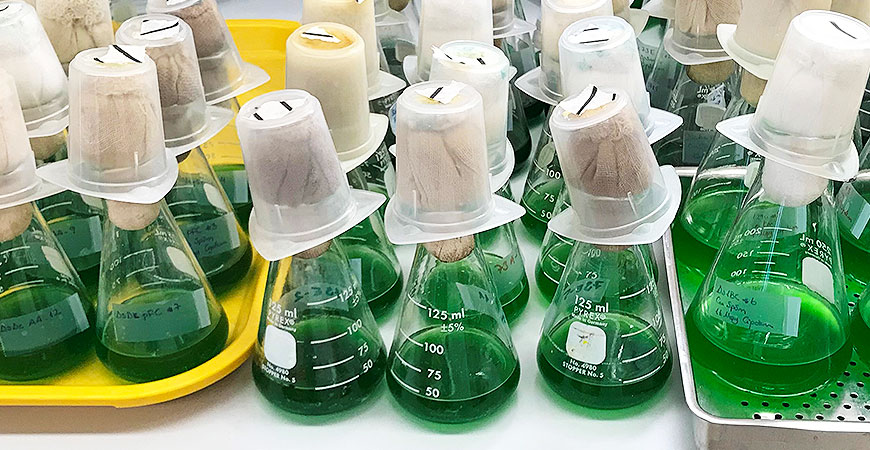
The researchers made their discovery in cyanobacteria, tiny aquatic organisms also known as blue-green algae. They uncovered the links between core components of cyanobacteria’s 24-hour clock that direct the rhythmic expression of genes.
By understanding how circadian clocks control genes at the molecular level, researchers can develop biological tools to biosynthesize target molecules at specific times of day.
“We were able to show how a single signal from the clock can turn one set of genes on and another set off, generating opposite phases of gene expression. In that cell, that means some cellular processes are peaking at dusk and others at dawn,” said UC San Diego biological sciences Distinguished Professor Susan Golden, senior author of the study.
Circadian clocks have drawn increased interest in recent years because of their central role in health and medicine. Medications and vaccinations are more effective when taken at specific times to align with our circadian rhythms.
The research team’s cyanobacterial clock discovery is notable because it is distinct from the clocks found in humans and other organisms known as eukaryotes. The study is detailed in a new paper in the journal Nature Structural and Molecular Biology.
LiWang, a member of the Department of Chemistry and Biochemistry, the NSF-funded CREST Center for Cellular and Biomolecular Machines and the Health Sciences Research Institute, has worked with cyanobacteria for years to delve into the puzzles of circadian clocks. He and his fellow researchers have now built a clock that times transcription using purified components. They also developed a synthetic gene expression system that may be portable to other bacteria, such as the workhorse of biotechnology, Escherichia coli (E. coli), and showed that it can turn on a test gene rhythmically with a predictable phase of expression.
“These are practical biological tools that can be expanded to control the synthesis of desirable biological products in cyanobacteria or in other kinds of microbes used in biotechnology,” Golden said.
The research was funded by the National Institute of General Medical Sciences of the National Institutes of Health and the Biotechnology and Biological Sciences Research Council.


